Professional Qualification
When I graduated I was invited by my former Course Leader, Prof. Brian Wood, to the committee of the Chartered Institute of Building (CIOB) Oxford Branch, which I joined in 2010.
The Oxford Branch worked hard with other centres in the South-East Branch of the CIOB to deliver an extensive programme of CPD lectures, presentations, and site visits. A great deal of the activity of the institute was, at that time, in support of the government policy of the Blair administration; the Design for Manufacture Competition, and The Zero-Carbon Homes Standard.
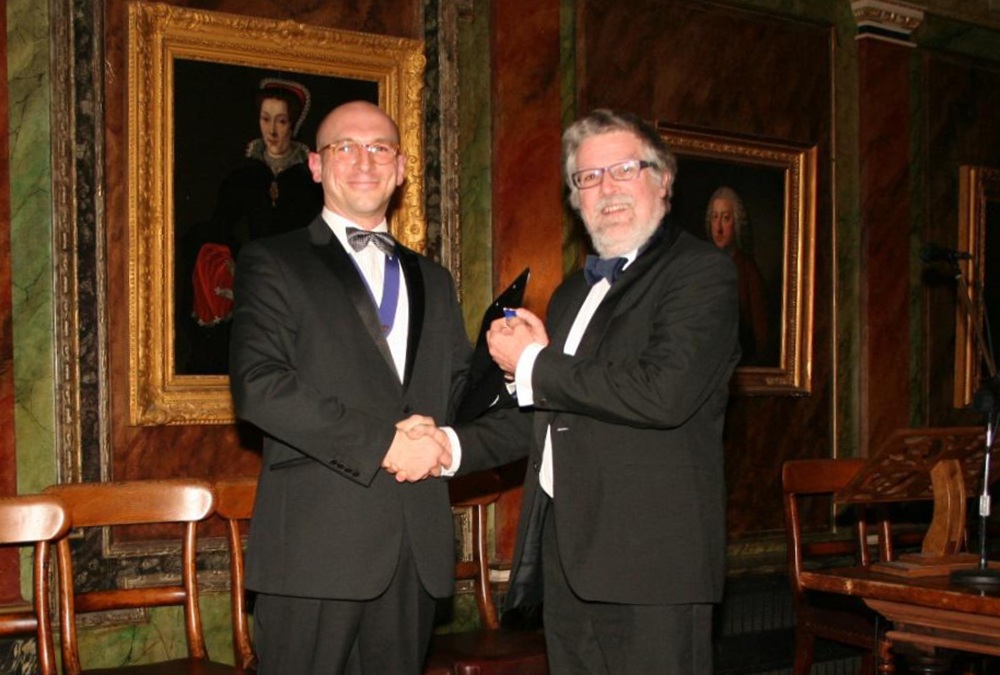
I became the chairman of the CIOB Oxford Branch in 2013. As host of the Biennial Gala Dinner at Trinity College Oxford, I presented the former chairman, the now Reverend Brian Wood, with a medal recognising his service to the committee .
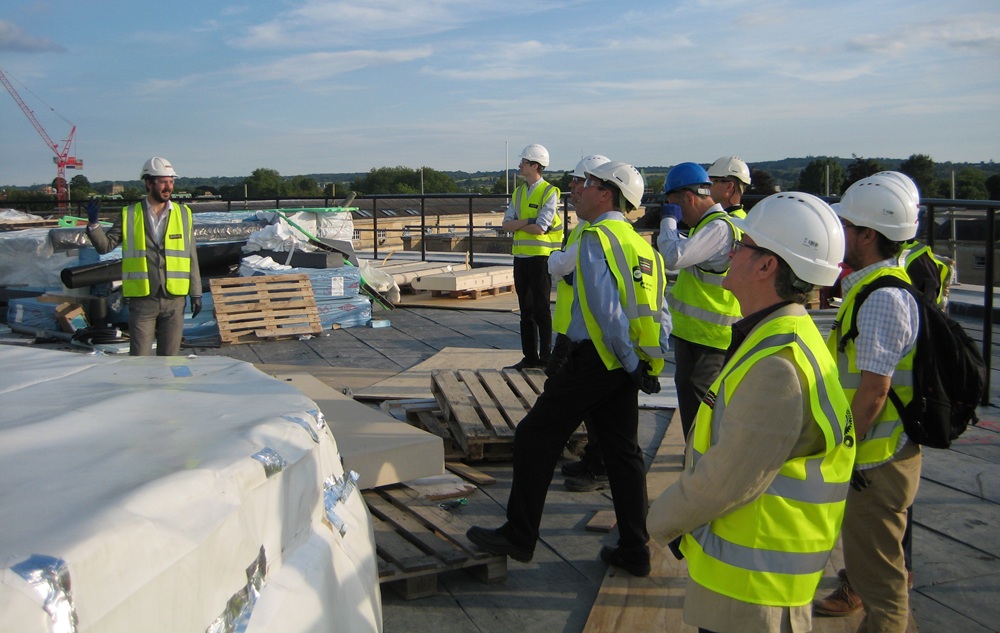
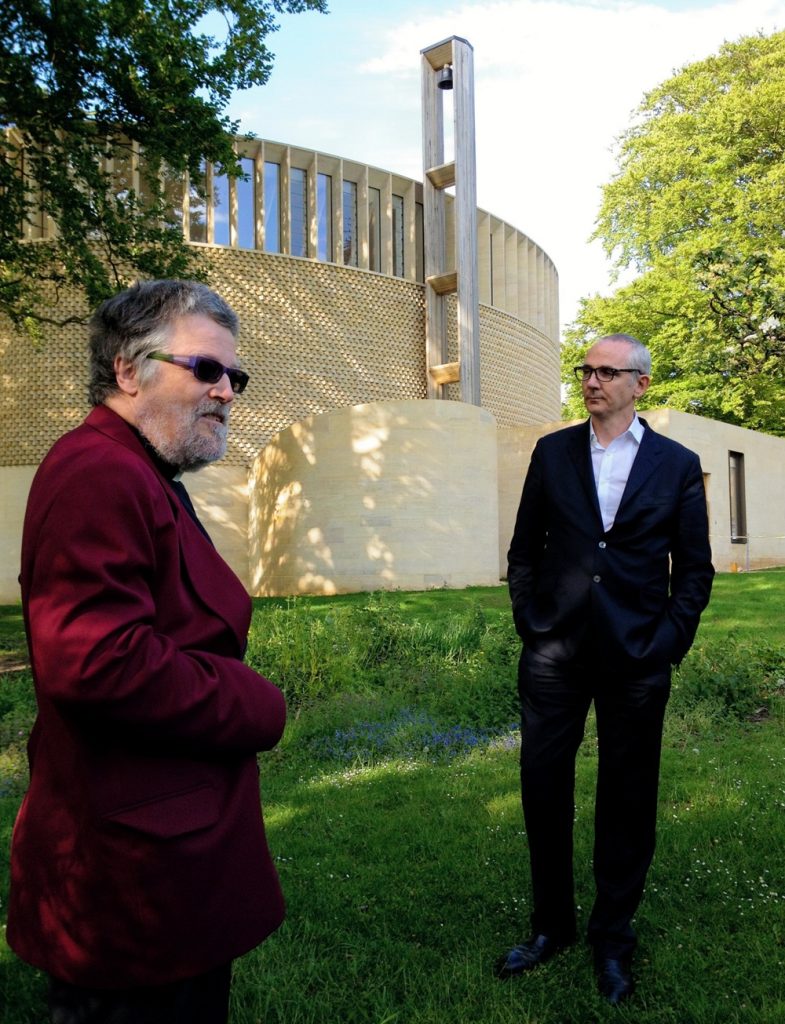
I hosted various events, including the notable architect Niall McGlaughlin, with the construction team from Beard, at the award-winning Bishop King-Edward Chapel at Ripon College Seminary in Cuddesdon, near Oxford.
I was privileged to spend a good half-hour talking architecture with Niall McGlaughlin, as I gave him a lift to the station. He impressed upon me the necessary scale and breadth of experience and appreciation, that collectively give rise to beautiful architecture.
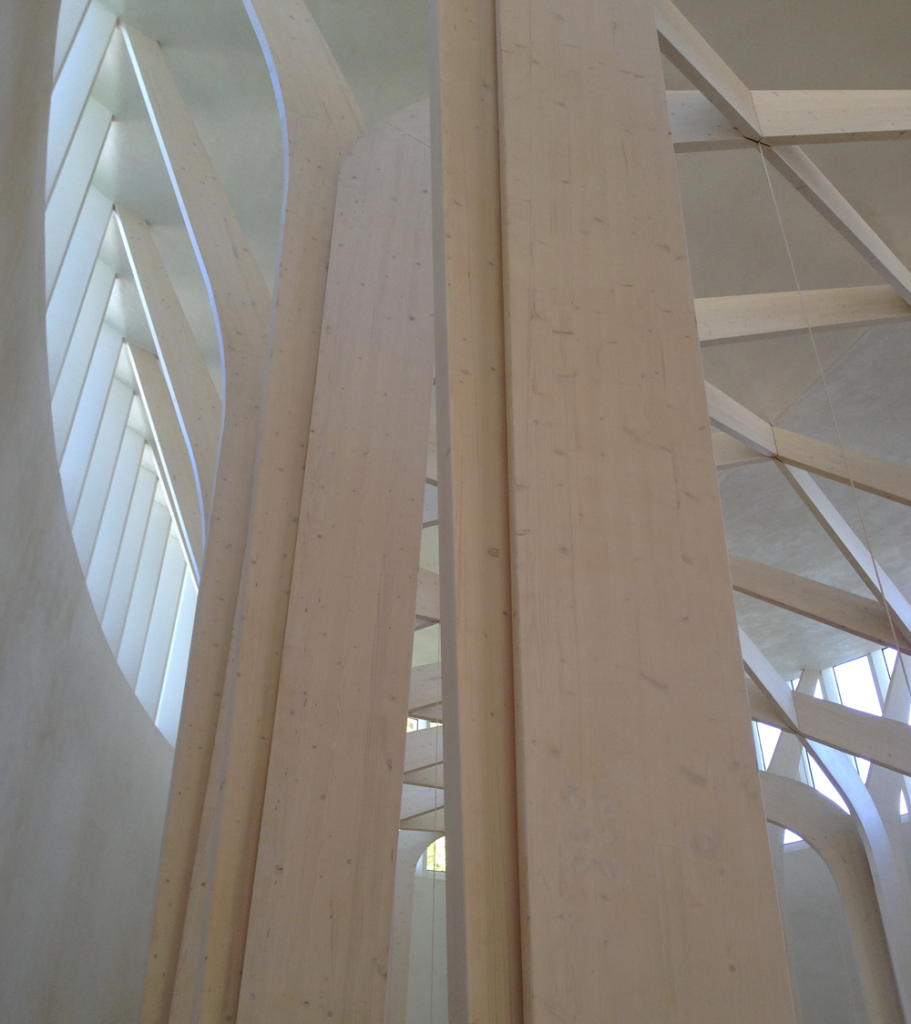
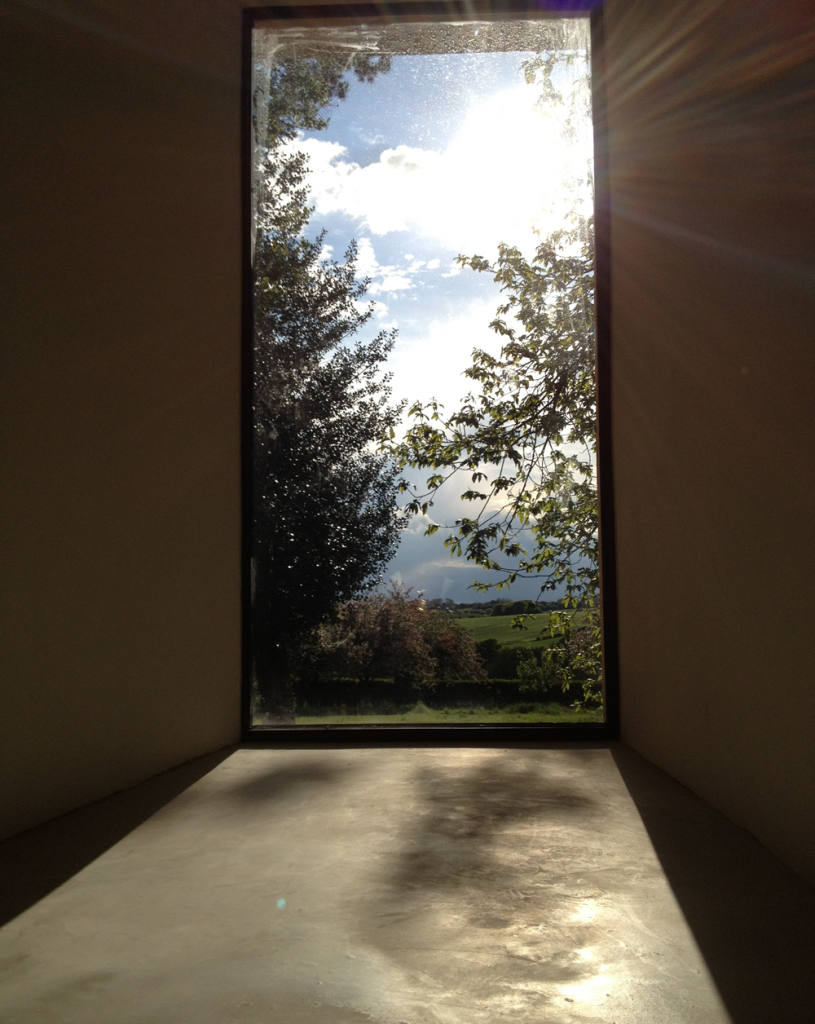
Niall gave us a tour of his haunting chapel, which he designed to invoke the feeling of being in a ship; filigree pine vaulting stretching upward like the bones of a fish. He described how he had tried to nurture numinance; the atmosphere of spirituality. Venerated spaces are the apex of architecture in my view. Sagrada Familia was epic in potential, this was a perfect jewel. I maintain an ambition for the ecclesiastical.
During my chairmanship, the CIOB underwent a significant reordering; the significant headquarters, Englemere, was sold. As an aspiring member, this was a blow, as I had seen inspiring photos of new members reciving ceremonial entry to the institute, pictured on Englemere’s grand staircase; professional qualification was celebrated like a second graduation. It became my view that the institute was shifting from representing the profession of building, in order to concentrate on the specific technical discipline of construction management.
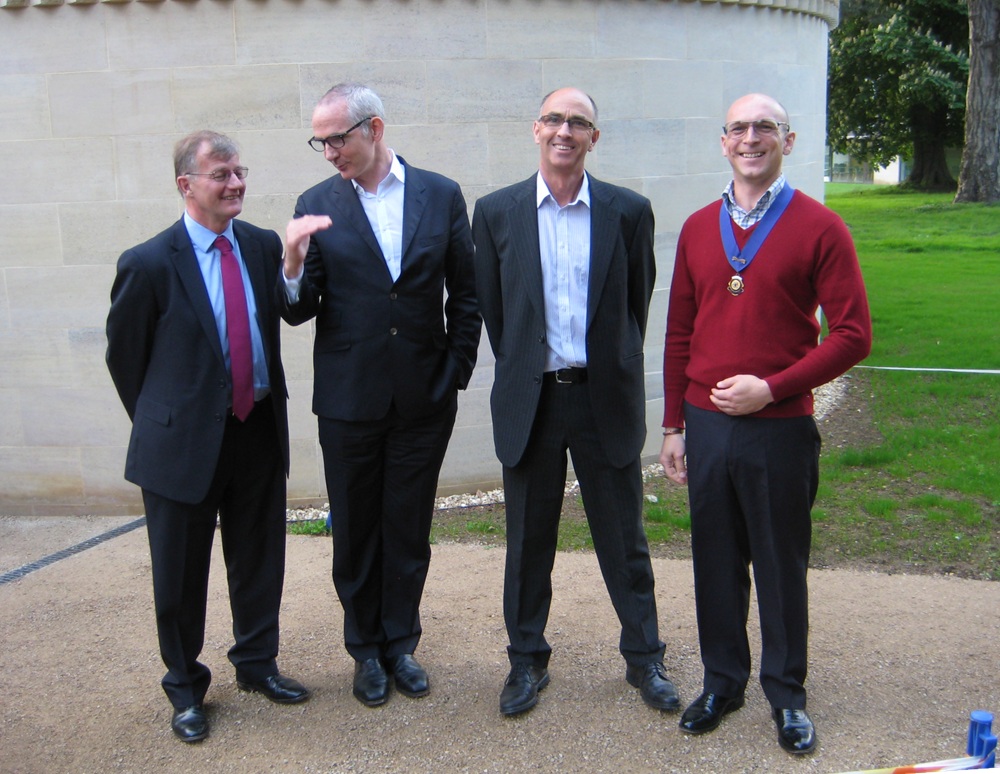
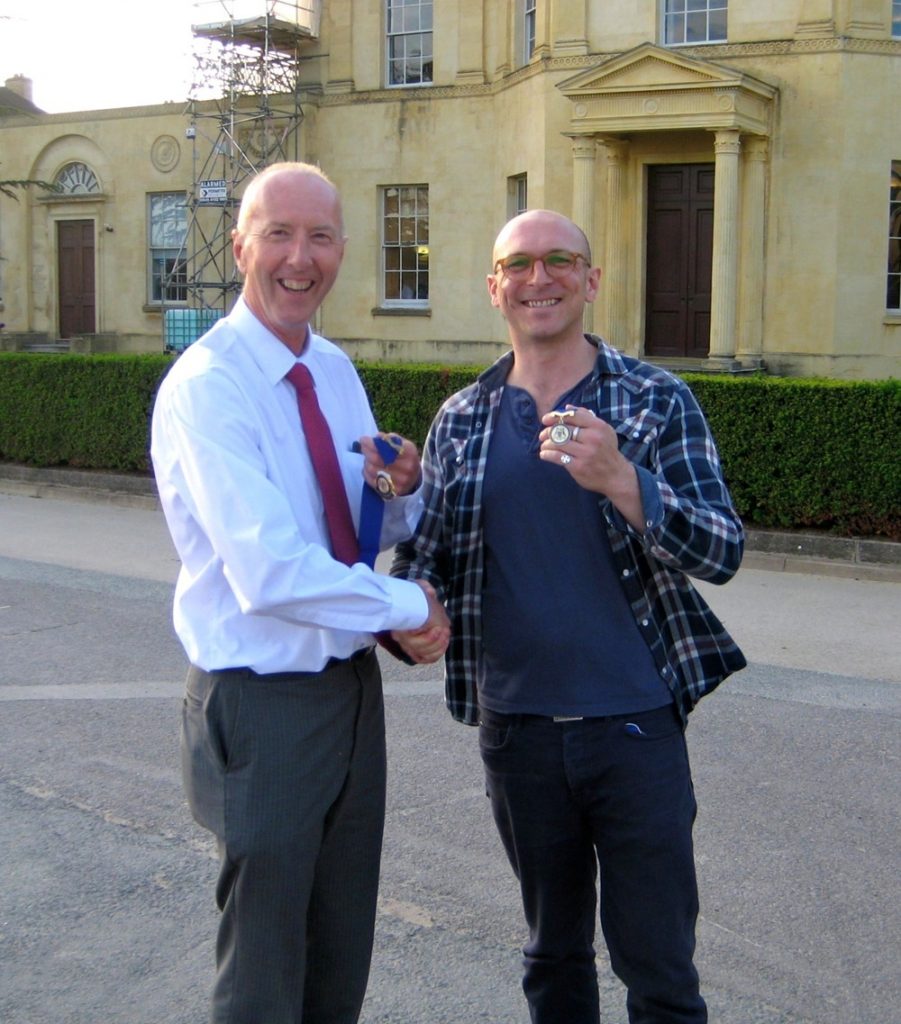
As the constitution of The CIOB was shifting, my path to full membership was ended; I did not meet the competency requirements, as I was not engaged in construction management activities in my business. I handed back my chairman’s medallion, and received a medal in recognition of my service from W.G.Carter’s Nigel Fitzgerald, at the newly restored Radcliffe Observatory in Oxford.
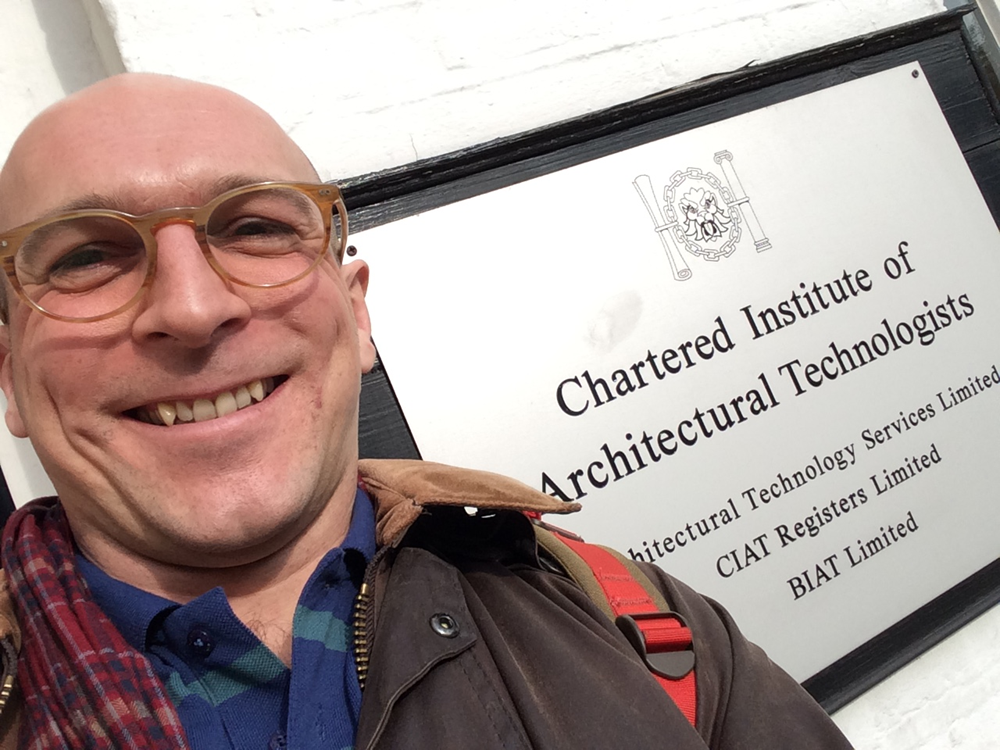
Following my departure from the CIOB, I set about finding a path towards professional qualification; I joined The Association of Environment Conscious Building (AECB), studied to become a Certified Passivhaus Designer, I attended Building Information Modelling (BIM) training at The Building Centre in London, and I attended my local BIM Hub. I studied a course on PAS1192 with author Mervyn Richards OBE, I attended events organised by the Oxford Club of Constructing Excellence, I was invited to present at the Institution of Civil Engineers’ ICE BIM Conference at Olympia in 2016, and I was featured in the Oxford Mail business supplement. Through my training, I became aware of the Chartered Institute of Architectural Technologists (CIAT), who’s competencies (areas of specialist knowledge) seemed more closely to match my business activities than did the CIOB’s requirements.
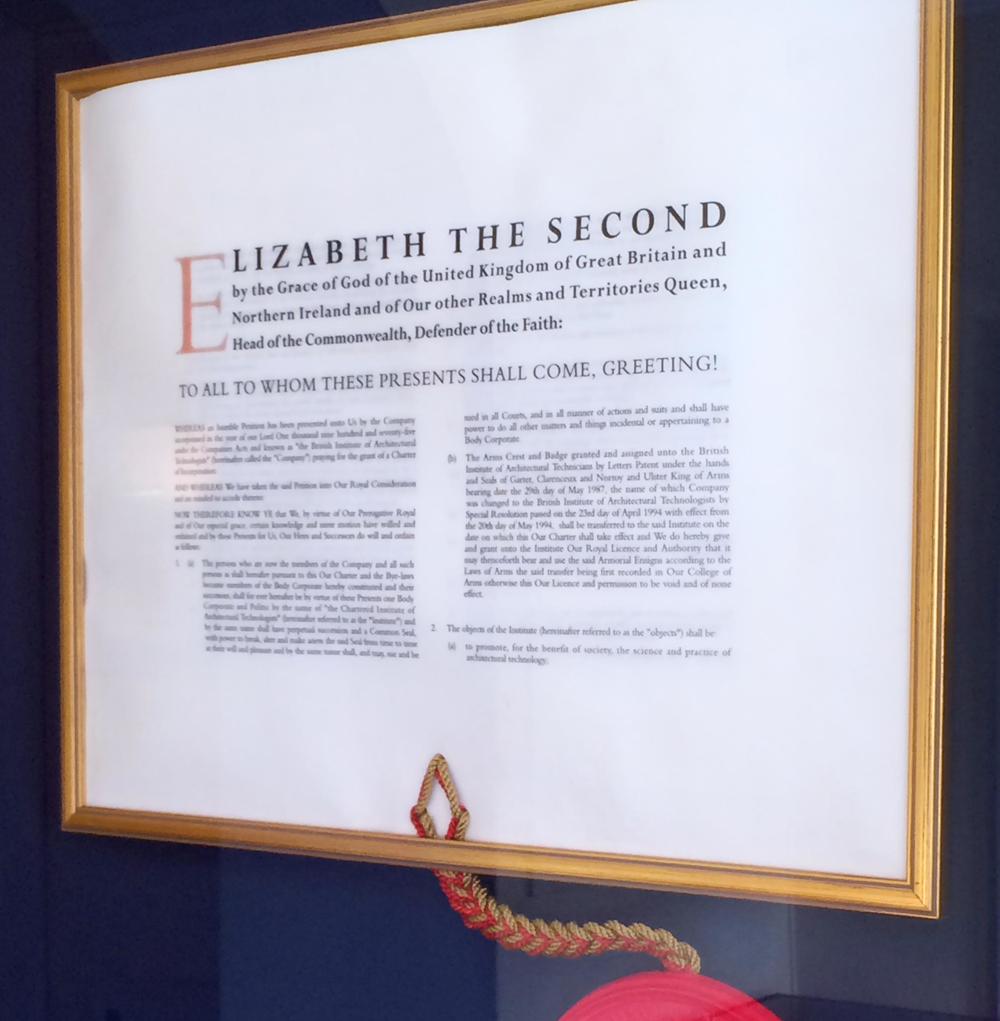
Architectural Technology is a design discipline for building projects, combining technical and aesthetic expertise. The Chartered Institute of Architectural Technologists is a membership organisation, owned and operated by its members. Under its Royal Charter the objectives of the Institute are:
2. To facilitate the development and integration of technology into architecture and the wider construction industry to continually improve standards of service for the benefit of industry and of society.
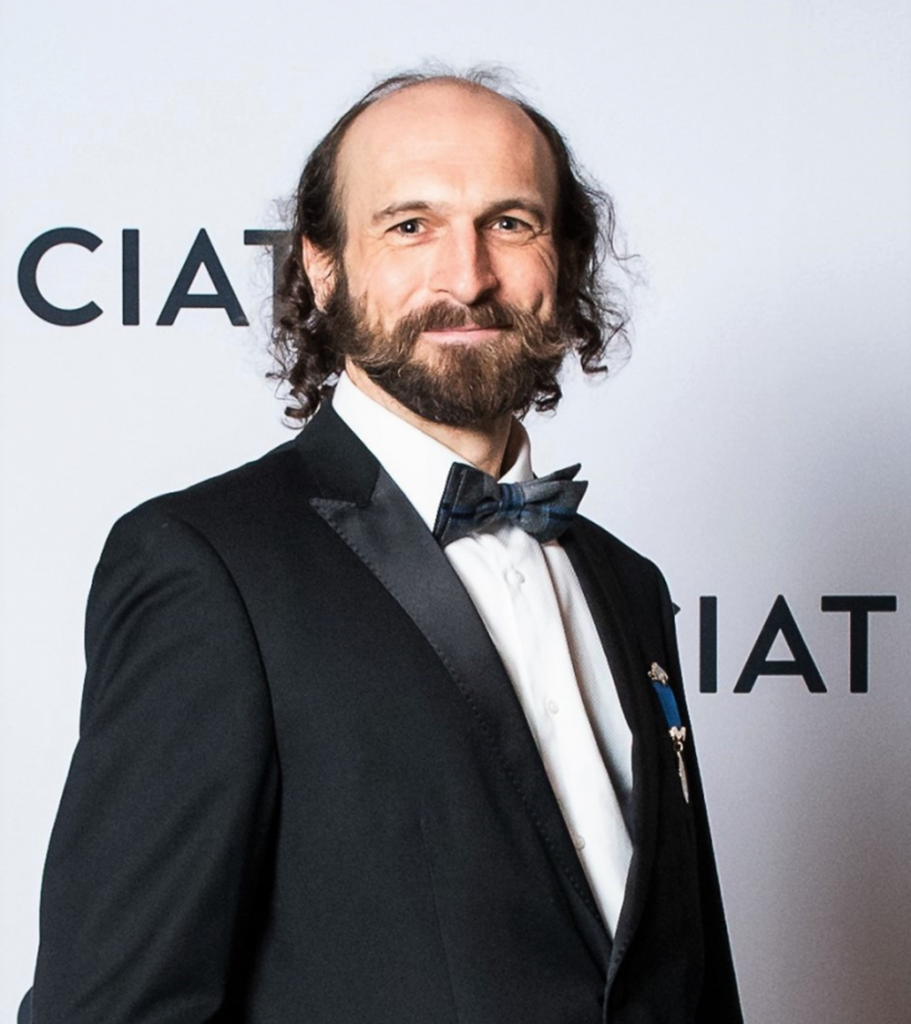
As I found with the CIOB, CIAT was also changing its constitution and routes for entry. I had to hurry my submission in order to be considered under the existing rules, before they were changed the following month. I submitted a package of documentation, mostly composed of Cogan Terrace drawings, attended a Professional Interview with 2 Chartered Members, and was admitted, without ceremony, to The Chartered Institute of Architectural Technologists on the 15th November 2015.