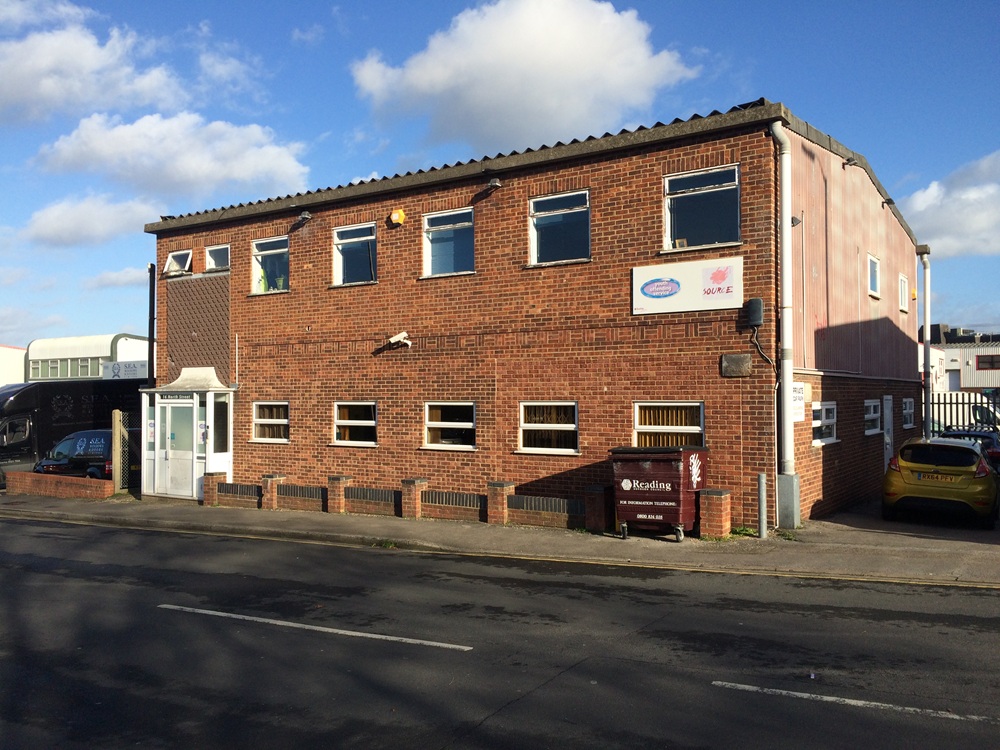
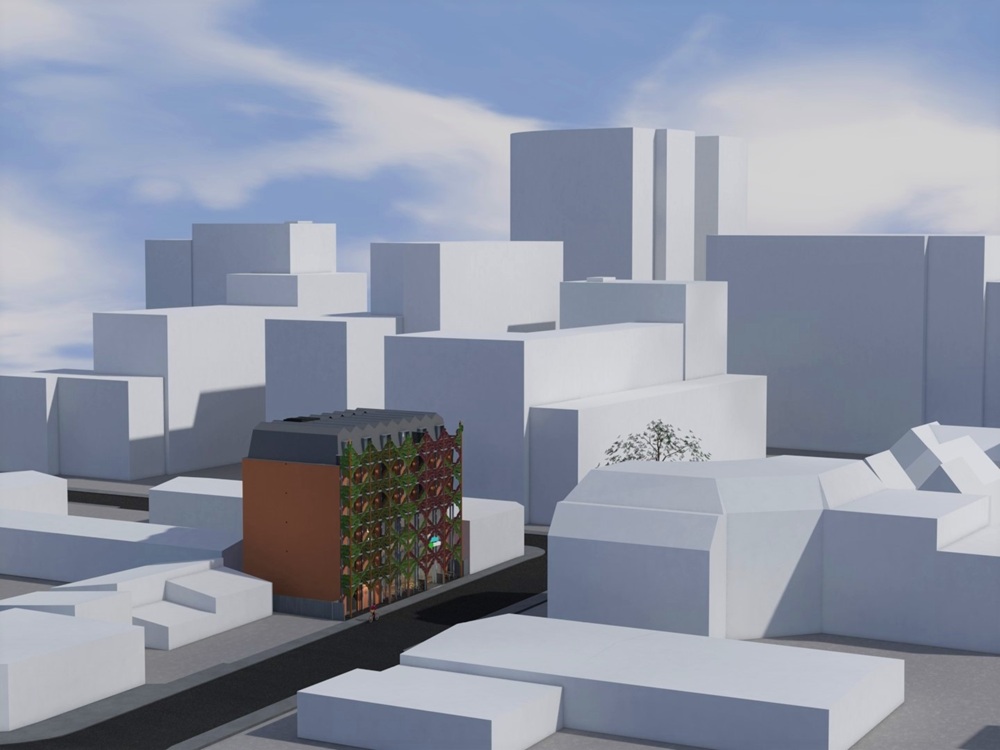
A small dilapidated industrial site in Central Reading was purchased by my long-standing collaborator Joe Miles in 2017 for speculative development. I have produced several schemes for this site, attending various meeting and making various presentations. The requirements of the local authority for scrutiny of new developments is many time more burdensome than for any other scheme I have ever produced. Reading Borough Council (RBC), is what might be termed a Policy Leader. The evolving Reading Local Plan extends and augments national policies, with a particular preference for matters of the environment and equality.
An initial pre-application gave rise to a full-planning application for a mixed-use building with car parking. The site is part of a wider area of terraced housing that was compulsorily purchased by RBC in the 1980s, for demolition and replacement with an industrial park. The wider area is identified in The Local Plan, which calls for comprehensive redevelopment of the industrial park. Our planning application was resisted on the grounds that it would prevent a comprehensive approach being taken, leading to its withdrawal.
Having considered the matter, I pointed out to the planning officer that perhaps the authority was unreasonably preventing our development in order to protect its own assets. Further research by Joe Miles revealed a convoluted web of leaseholds and sub-leases that prevent development of the adjacent land in any case. It was agreed to proceed with another full planning application.
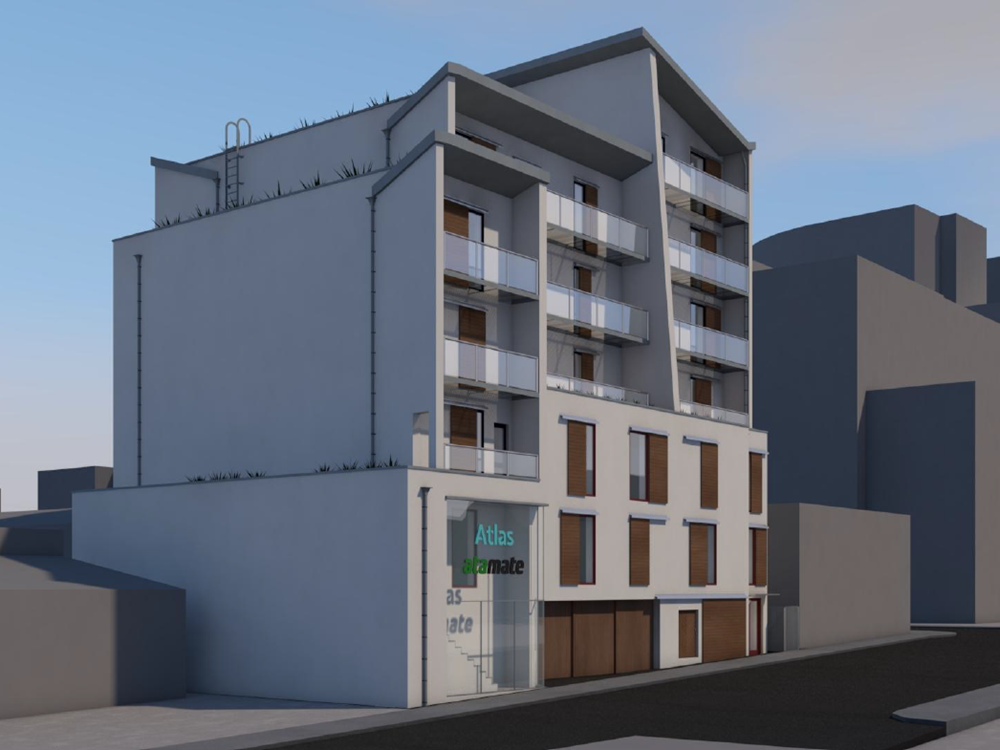
Planning permission was granted for a mixed-use scheme in 2019 after favourable review by panel of architects: the Design Review Panel, a recommendation to approve the major scheme by the planning officer, and a successful meeting of the council planning committee.
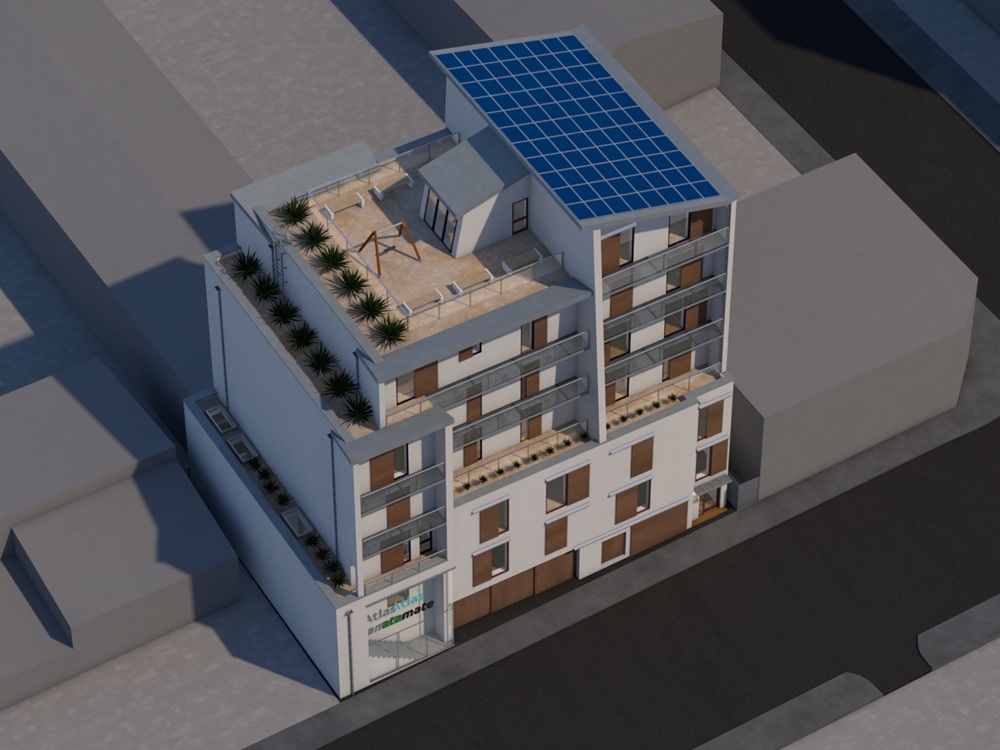
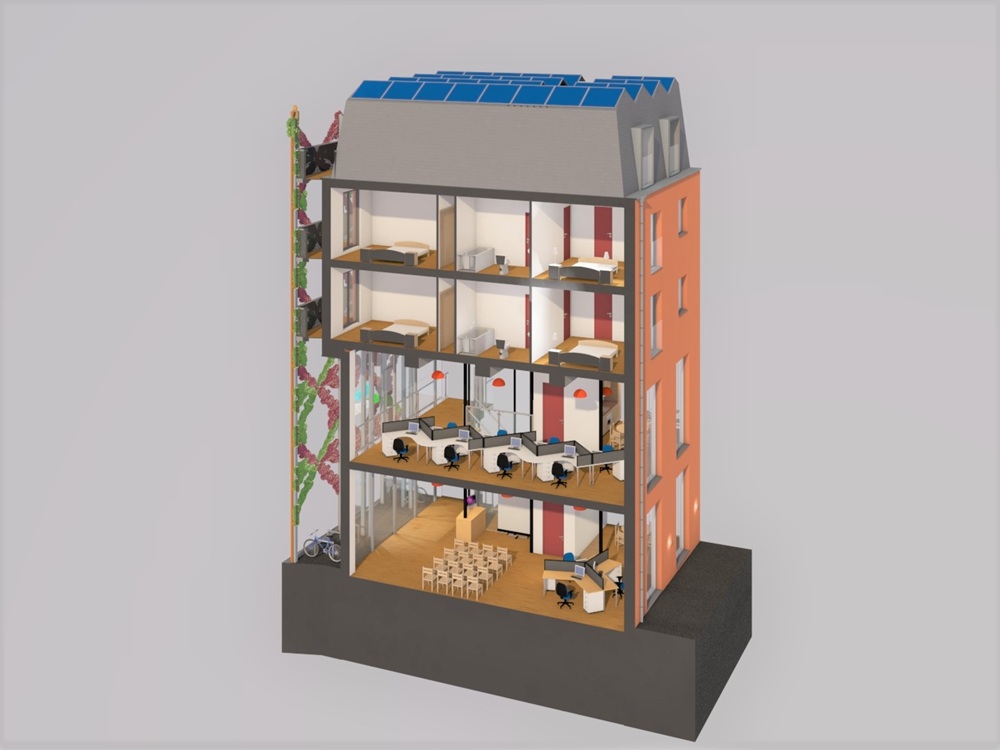
Building management and environmental control was proposed to be provided using Atamate and Ecocent, as had been tested at Cogan Terrace. Solar panels on the roof and rainwater harvesting were also proposed for what might have become the Atamate corporate offices.
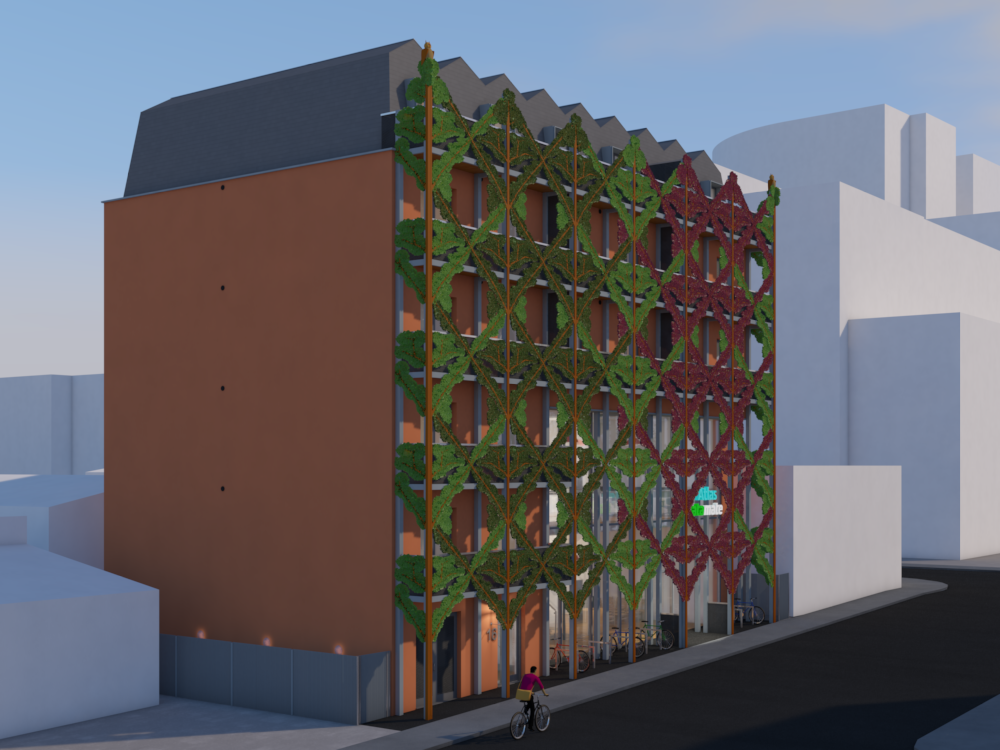
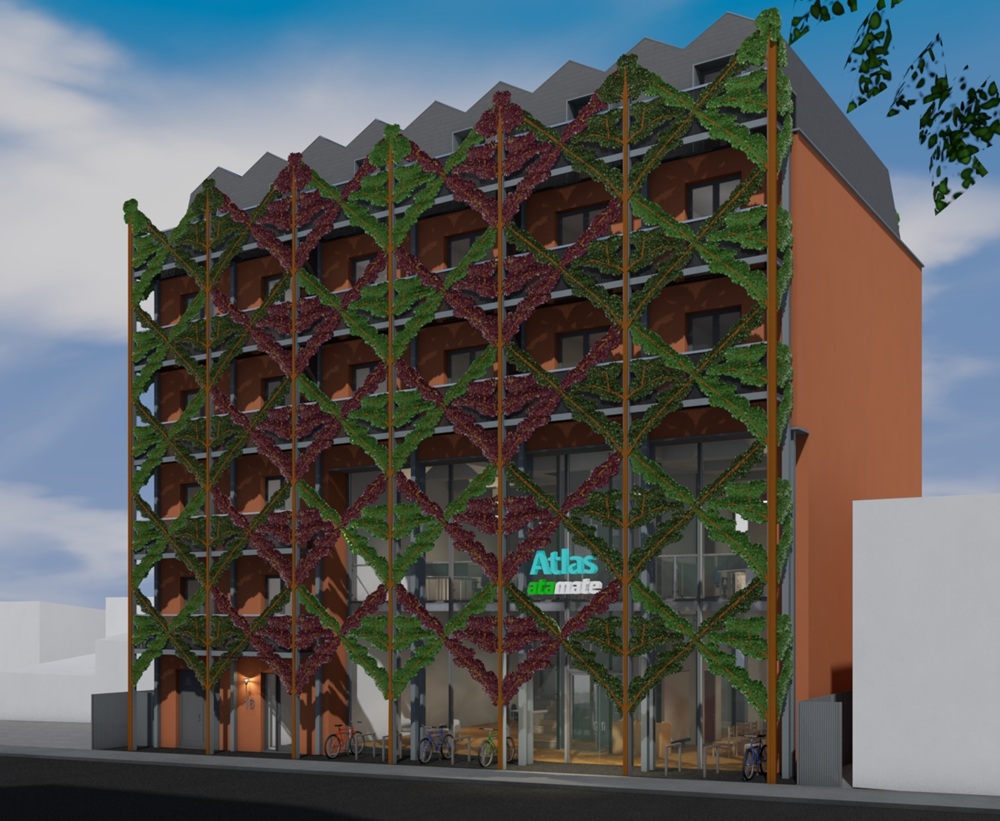
A free-standing steel frame was proposed to support the private balconies of the apartments, and a series of tall vines growing to provide leafy shade in the summer.
The six-story, car-free scheme proposed to provide 295 sq.m. of office accommodation over two floors, and 10 residential units; 4 units of 2 bedrooms, and 6 units of 1 bedroom. The building was designed for volumetric prefabrication, like a stack of boxes.
The global event of 2020 saw a contraction in the number of small and medium-sized enterprises (SMEs), in favour of larger corporations, and the widespread adoption of working-at-home practices utilising digital technologies, particularly among SMEs. The office sector is now skewed toward large corporate headquarters, and short-term rented space in multi-tenanted serviced-offices in central locations. The economic case for the approved scheme is no longer valid. A new scheme is designed and nearing submission to RBC.