London Olympics 2012 & Queen's Diamond Jubilee
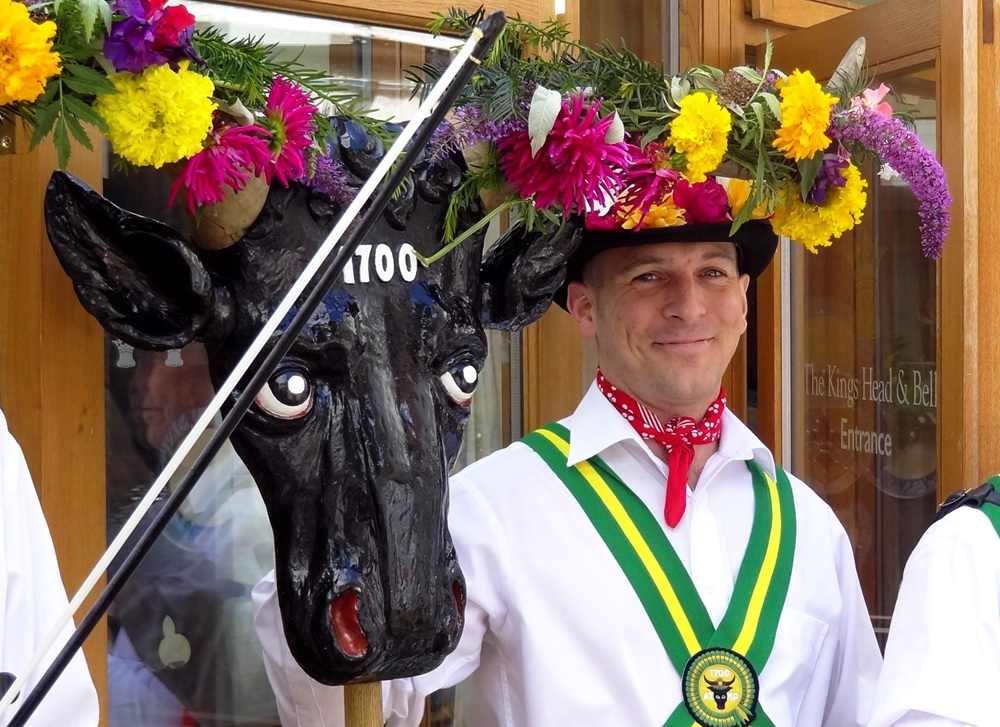
While it my seem incongruent to an architectural tale, the British events of 2012; The London Olympics, and The Diamond Jubilee of Queen Elizabeth II, were seminal to my view of myself and the reality of ambitions. In Abingdon, on royal occasions thousands of current buns are thrown from the roof of the County Hall to the crowded townsfolk in the Market Square below. Abingdon is said to be the oldest continuously inhabited settlement in Britain, and the traditional morris dancers of the town are one of a handful remaining with a continuous tradition stretching from antiquity. 2012 was to be a royal year, and I began it by joining the dancers, so I could join in the Diamond Jubilee celebrations, including the bun throwing.
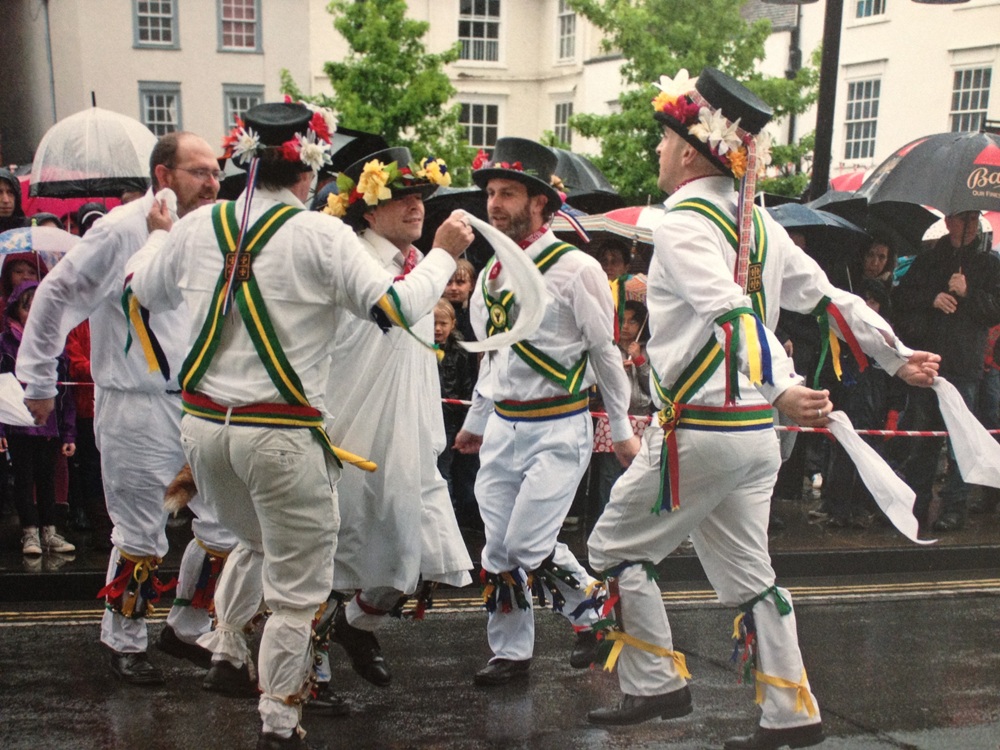
The day of the Jubilee came in the wettest of English summers. Rain like stair-rods had us soaked to the skin in our shirt sleeves, as the town gazed on beneath their umbrellas. I had followed my ambition and joined in, the proof being a large picture of us in the Abingdon Museum, a photo of which is shown here. James May brought some sort of device to fire buns to the crowd, alongside the Town Dignitaries and cricketers. The buns are rather large, and the County Hall quite tall; I took one to the face, I can say it dealt a hefty blow! I danced with the team for another 3 years; I learnt the Melodeon, and reordered the annual Mayor’s Day procession, to be more visible to the public.
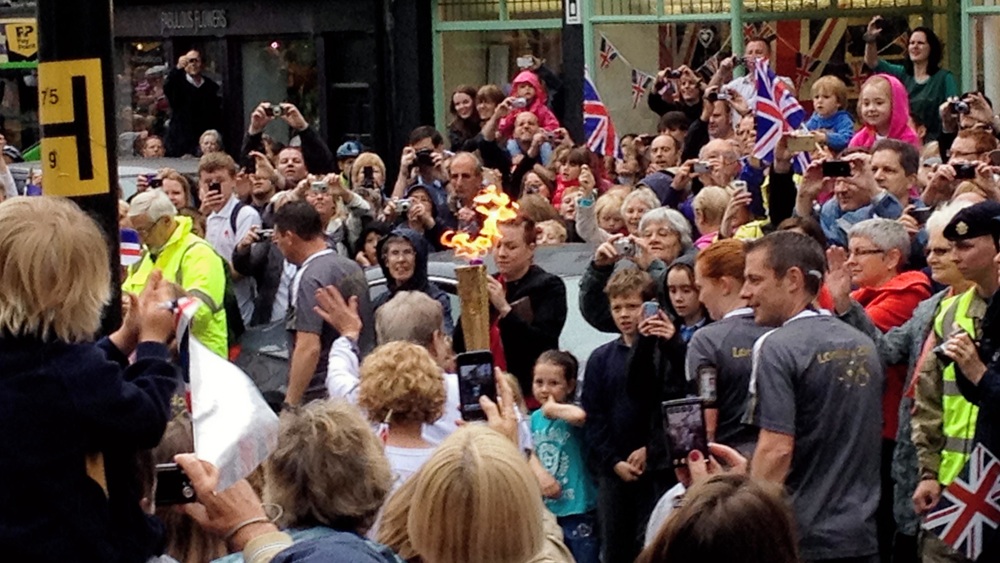
I had dismissed any notion of attending The Olympics, which were to be staged in London later in the year. A corporate spectacle, a political exercise, a corruption racket, I thought. My elderly friend Isabel asked me to walk her to see The Olympic Flame, as it passed through the town early one morning. Seeing it lit a fire in my heart. The Absolutely Fabulous Olympic Special TV show aired that evening. Watching it with Isabel, when Patsy and Eddie opened the doors to the stadium, and I heard on the TV the loud noise of silence in the arena, I knew I had to go.
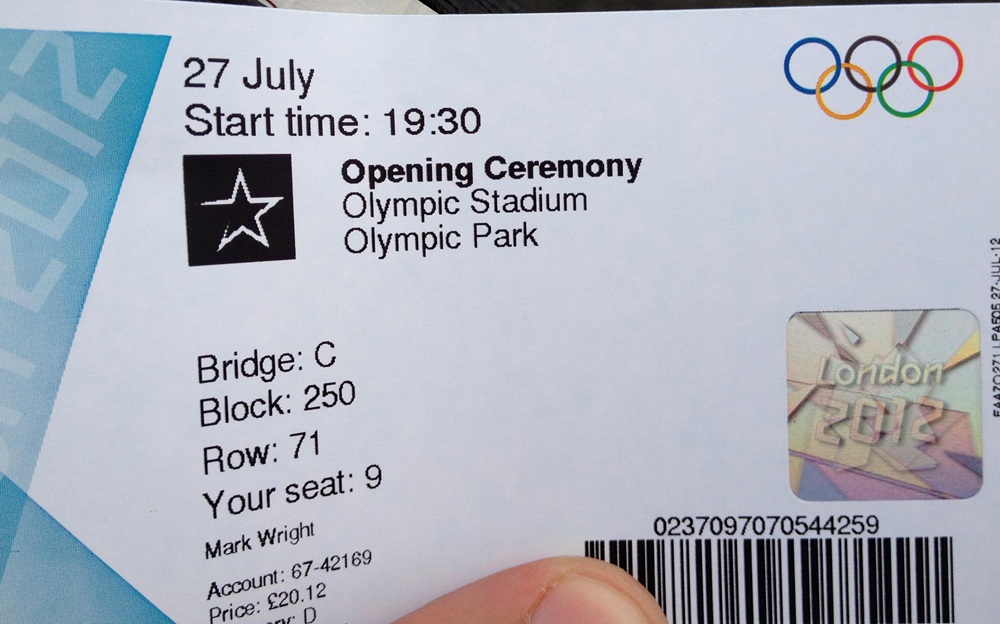
I didn’t have very much money, and the ticket lottery had already finished. As the stadium preparations were finishing off, a few seats with restricted view were being released daily in tiny bursts, and some of those tickets were on sale for £20.12. From 9 to 5 daily I sat at my computer, pressing F5 to refresh the ticket webpage. I mastered the 6 number Captcha; one look to remember and type the code, then through the maze of possible tickets to the one I wanted, The Opening Ceremony. Like Charlie in Willy Wonka, after days and days, my moment came, a golden ticket, the payment screen, confirmation, I WAS GOING!!
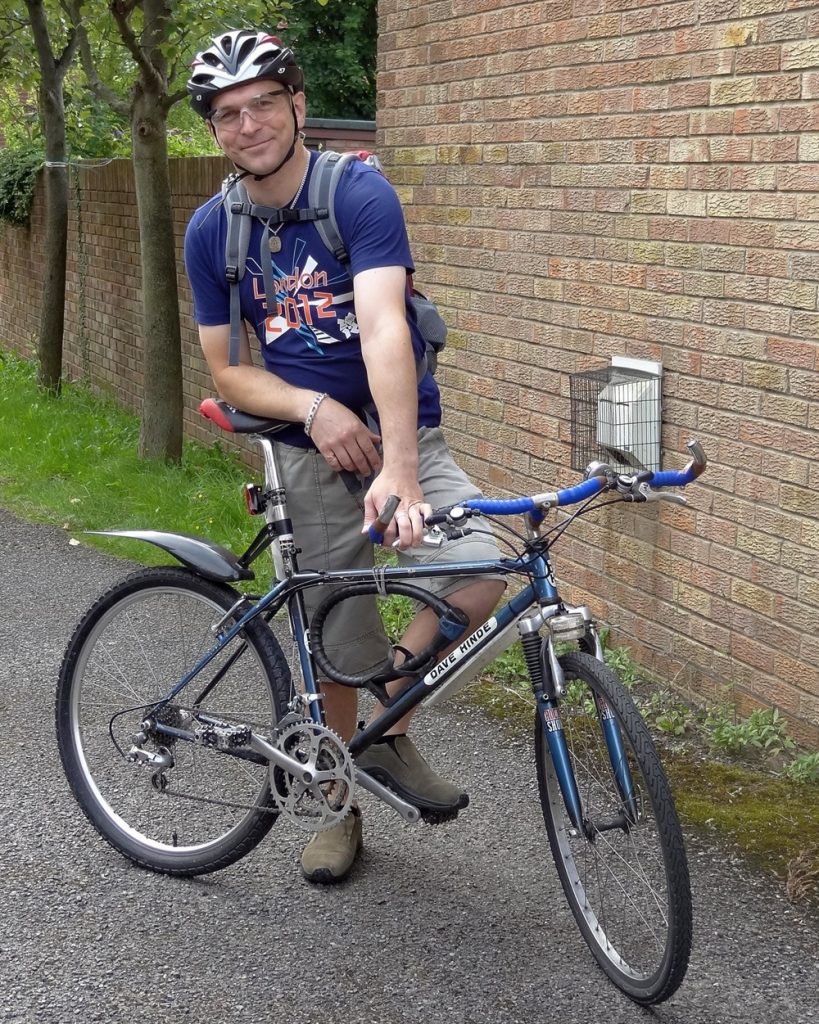
I reasoned that because I would be back late to Oxford, and I couldn’t afford a taxi, I would use The Oxford Tube coach, and take the bicycle I designed and had made for me when I was at school. Cycling first to Oxford to ring my bicycle bell along with the bells of the city ringing out as part of Opening Ceremony Director Danny Boyle’s national events, then to London; Marble Arch to Stratford for my ticket, then to Tower Bridge to see the flame arriving on Gloriana. Back to Stratford for The Ceremony, then to Marble Arch and the coach to Oxford, cycling in the dim light of the dawn back to Abingdon. I cycled 60 miles that day.
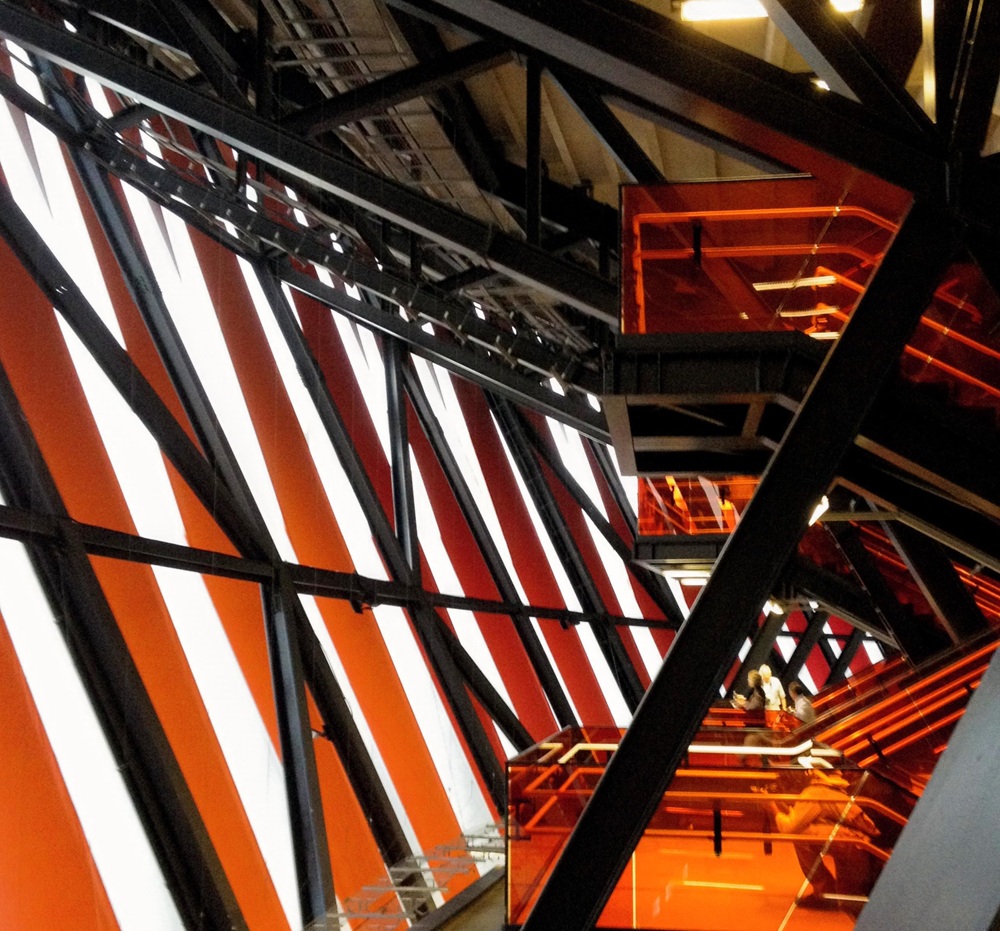
We had studied the development of The Olympic Park at university; it was very informative to see the lightest stadium ever built at first hand. Using the loo just before the ceremony, I ran into a pair of red-coated soldiers apparently apprehending a group of swarthy peasants; hundreds of volunteers were gathered, excitedly waiting to take the stage in their costumes. We bantered and I wished them well.
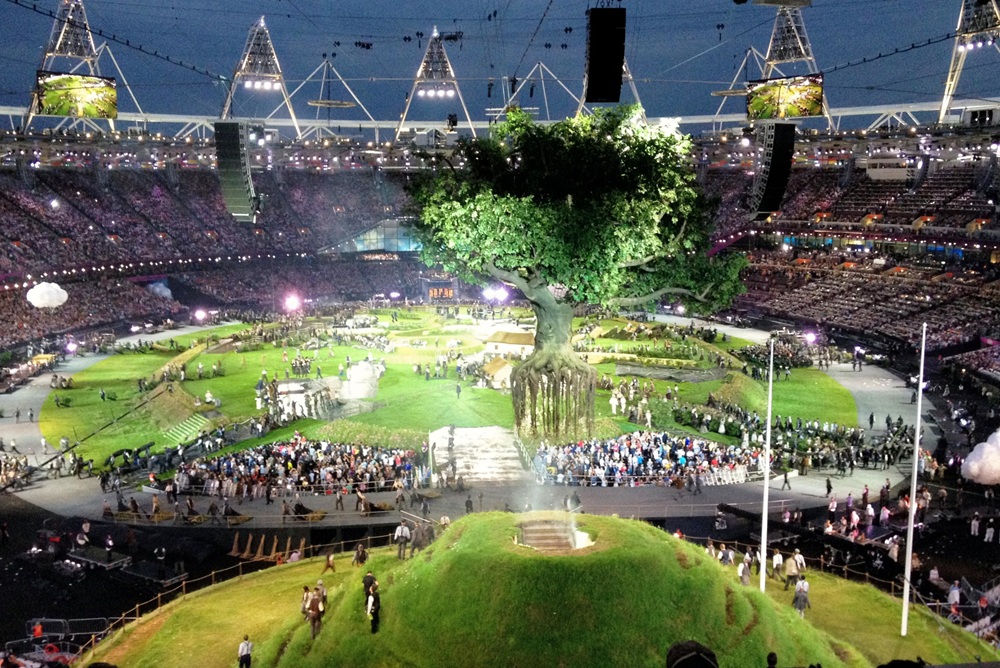
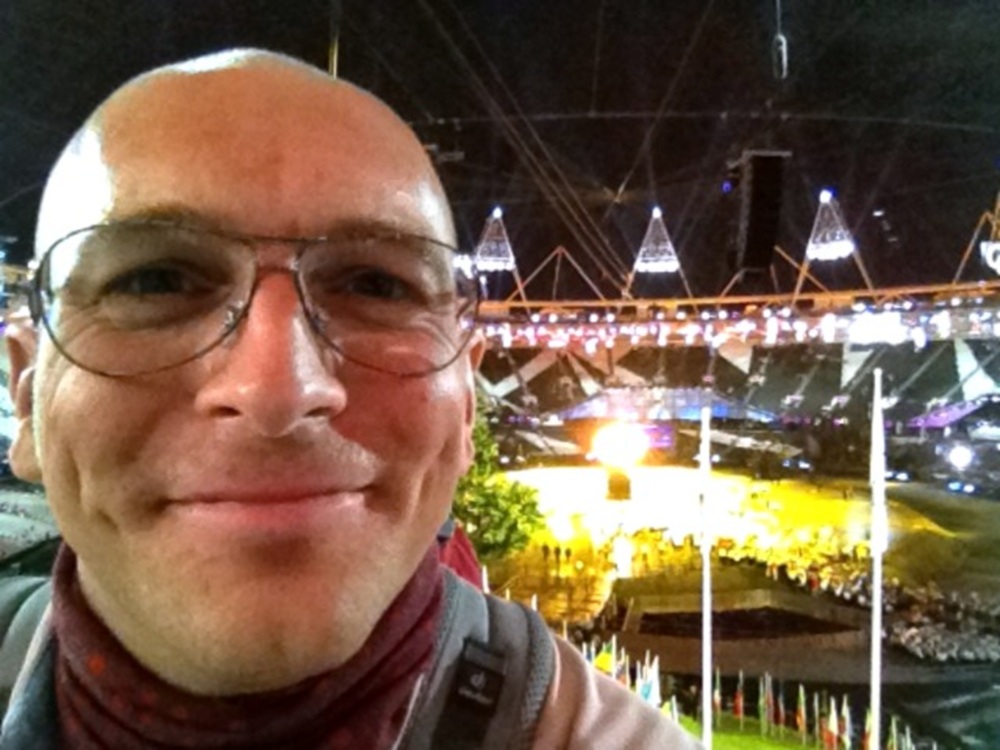
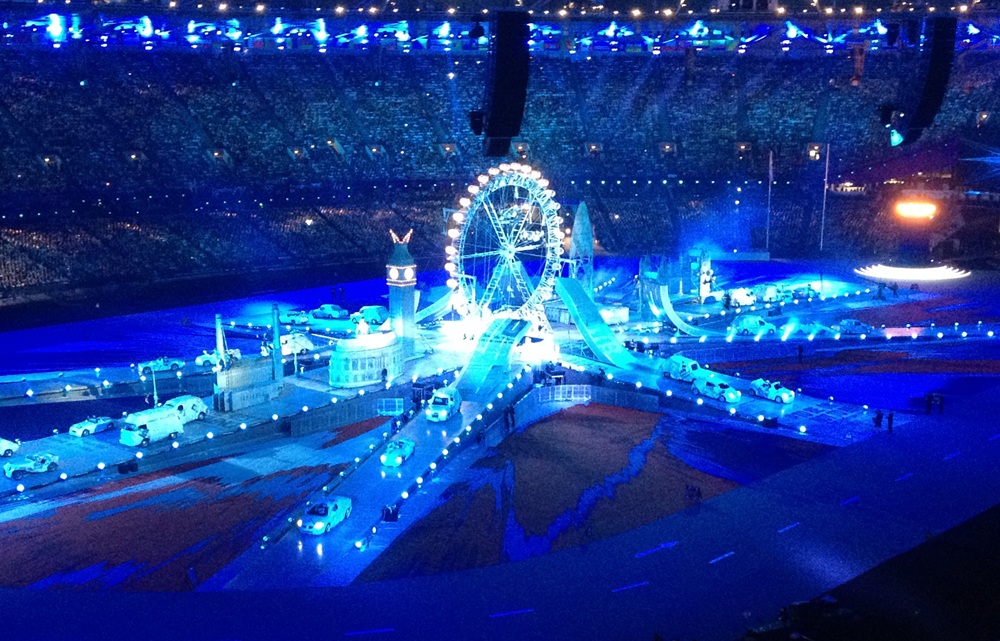
The restricted view seat, was restricted only by the extraordinary model Glastonbury Tor and the Heart of Oak tree. The electric atmosphere of anticipation was heighted by a charge in the air with the threat of thunder. The Red Arrows passed where I couldn’t see them, and the wait was for hours.
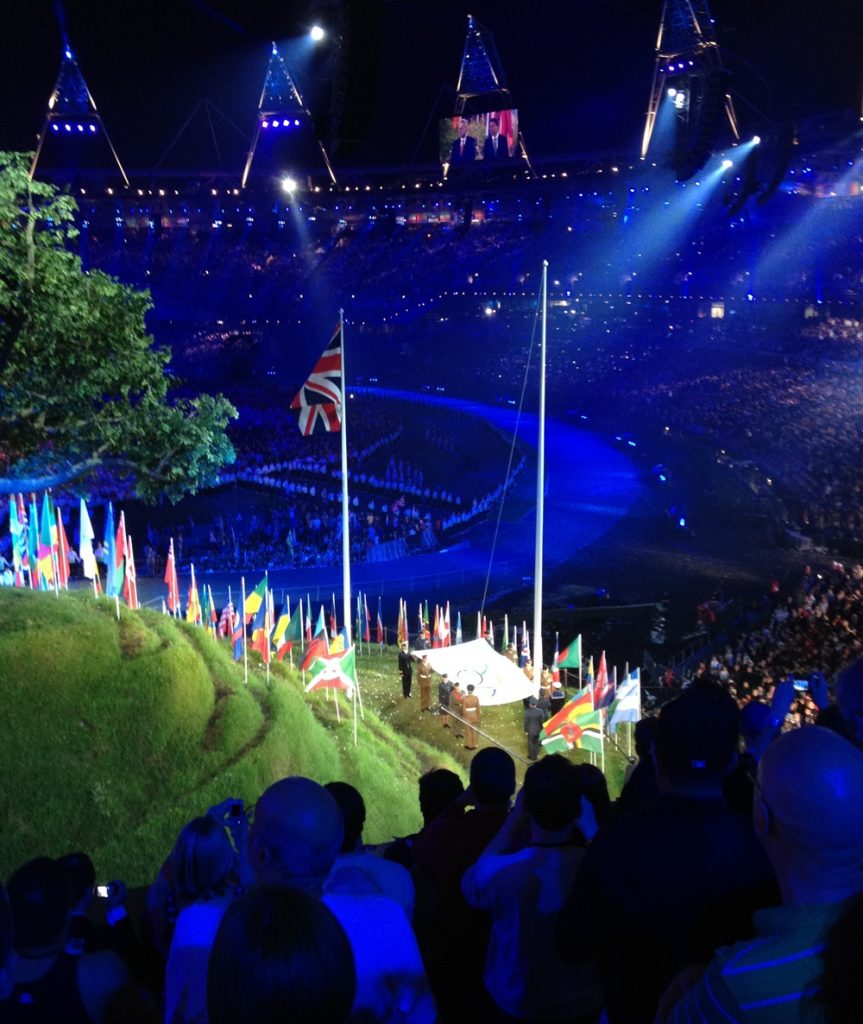
Bradley Wiggins rang the ‘largest harmonically tuned bell in the world’, and Evelyn Glennie fired out the opening shots of the evening from her tomtoms. The largest sound system ever assembled thundered a million watts into life. The stadium is so vast I kept taking off my glasses to see if that would make it feel any more real. The late Queen’s Cullinan II Diamond shot dazzling beams of colour into our eyes. The real sound of the feet of Akram Khan’s dancers above a great pulsing heartbeat from the soundsystem and Emeli Sandé’s tender rendition of Abide With Me, connected the vast spectacle to my reality for a moment. The stadium swarmed with light, and fireworks burst above us in spinning circular volleys, the sound pulsing round and around the stadium.
The flame was so fierce when it lit, I could feel the heat through my binoculars. When the crowd had cleared the stadium, hundreds of the volunteers, many of whom had dustbin-drums, danced and whooped around the cauldron like some ancient tribe, for hours into the night.
I was hooked, I watched every minute of the sport, waving my flag for the blizzard of Team GB medals, and then I was back. Another effort at the computer, another cheap ticket, this time for the Closing Ceremony!
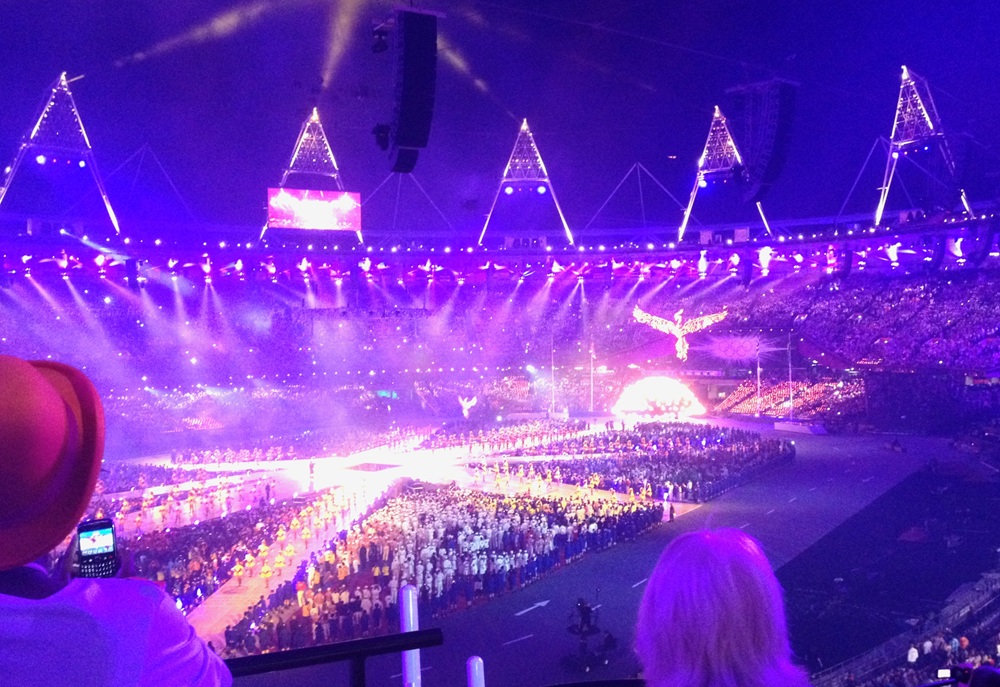
As Darcy Bussell danced down on her flying-wire, and the flame spread-out and died, the realisation that I was actually at The Olympics really hit home. I had willed this, as I had willed myself through University. I knew that anything was possible; if I had faith and perseverance, I could make things happen. Nothing was impossible; I just had to go for it!
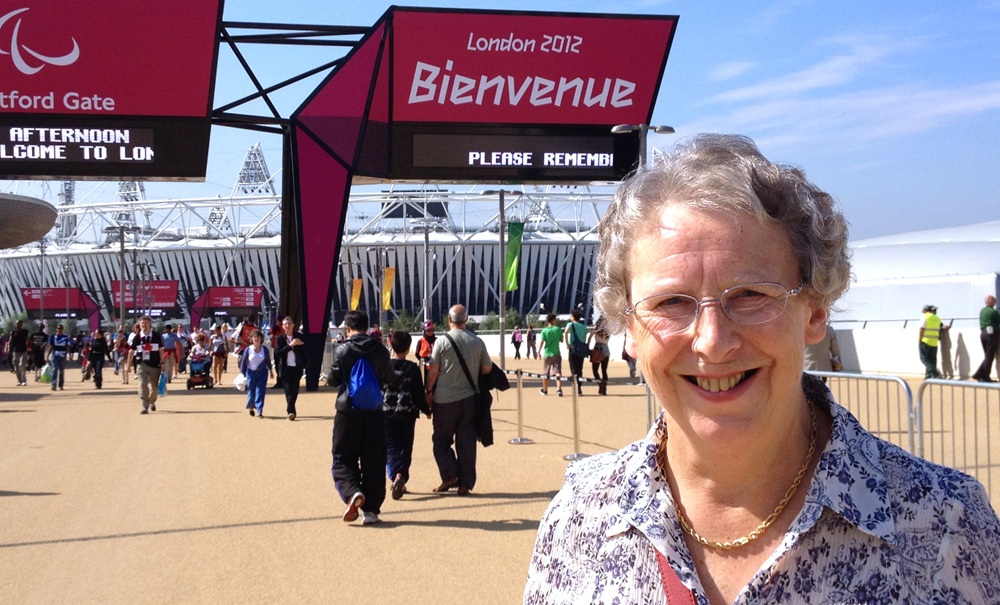
My mum, who had been a sports teacher, was sorry to have counted herself out of The Olympics, so I took her to The Olympic Park during the Paralympics a few weeks later. To make the most of our Olympic all-zone Travelcards, we took the coach to London, the Underground to St Pancras International, and the superfast Javelin train to Stratford International.
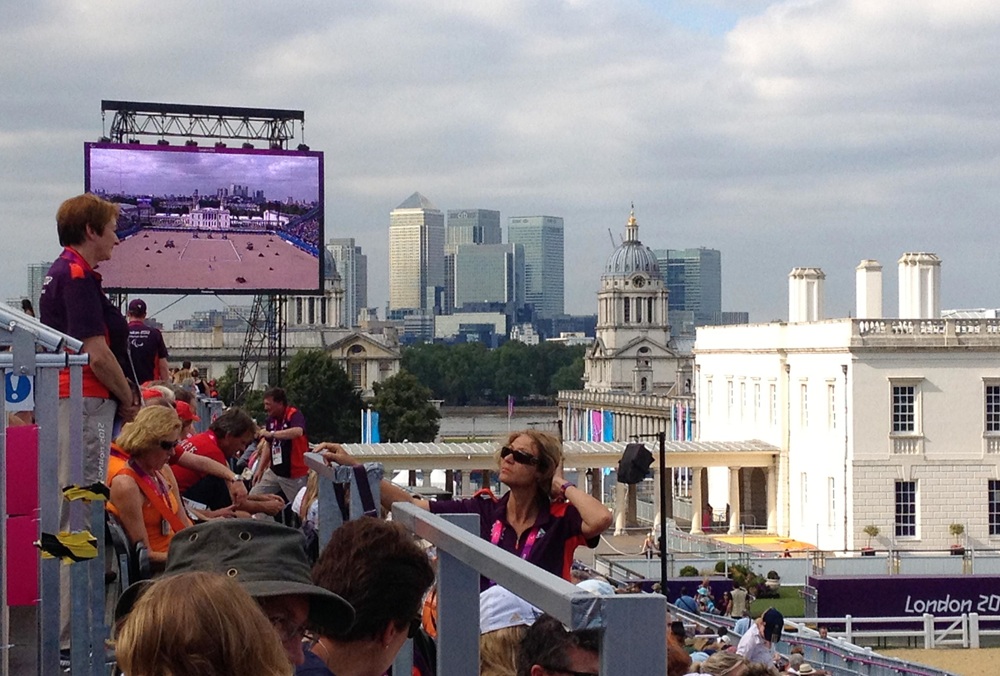
From The Stadium, we took the Docklands Light Railway under the Thames to Cutty Sark Station at Greenwich. We queued among the towering colonnades of the Old Naval College, and crossed the road to the Queen’s House, to see the Paralympic Dressage finals. We sang The National Anthem twice; for the GB Paradressage Team, and Individual Gold Medallist Sophie Christiansen.
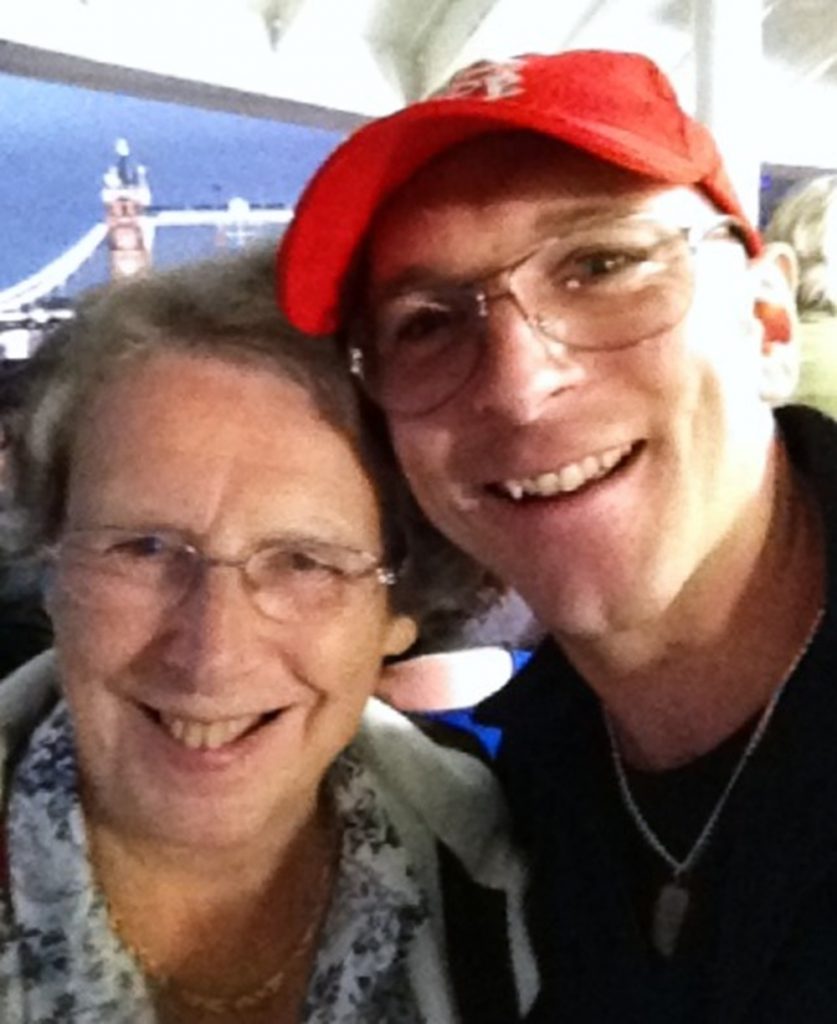
We sailed back along the river on a Thames Clipper, racing though the resplendent towers of the Isle of Dogs to Westminster in golden hour. We again caught the tube, descending through the incredible escalator chasm at Westminster Underground Station, and onwards, to catch the coach home to Abingdon.
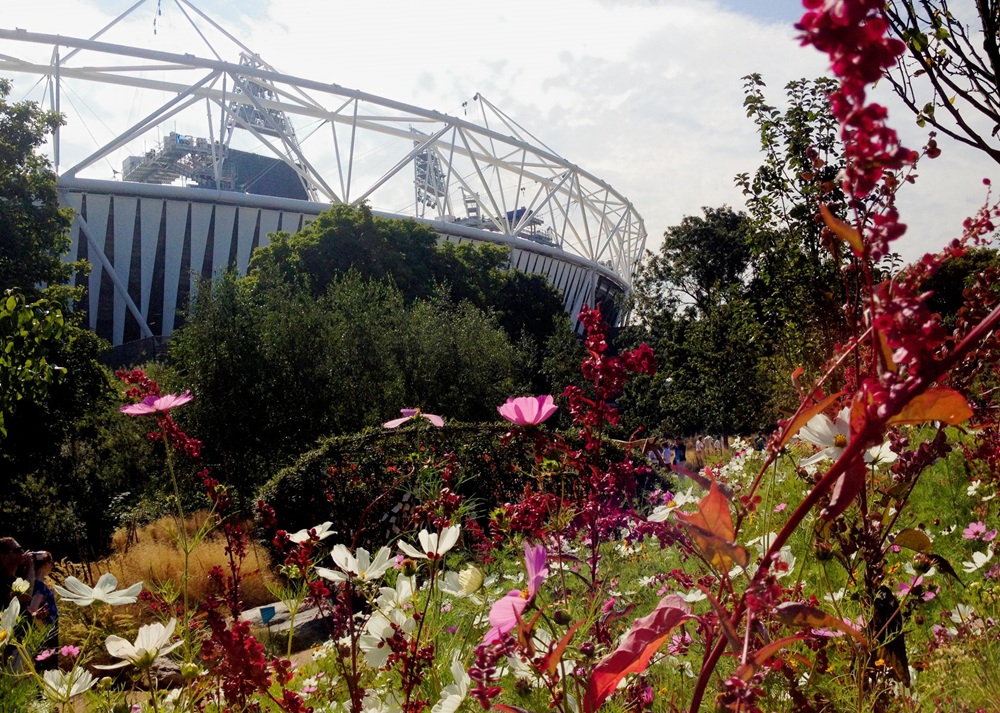
The Queen Elizabeth Olympic Park, as it is now known, is a truly extraordinary legacy for the nation. While we were promised an inheritance of green space, sporting facilities, and a new residential district for London, the press at the time were full of examples of dusty and abandoned facilities in Barcelona and Athens, unused remnants of their Olympic projects. London, however is a success in my view – the park is beautiful, the stadium is amazing. Somehow the flame still seems to burn; in the water, the soil, and the wildflowers. There can be no doubt, however, of the social cost of the games. Property inflation is displacing traditionally local families for a new type of resident, one who chooses to raise capital over children; local schools are closing – the Olympic Park is an island of the wealthy in East London.